
Karen Johnson
Hi! I'm Karen! I've spent the last several years dealing with the neighbor from Hell. I've got tools & tips to help you with your Bloated Bully issues!
Most terrible neighbors don’t introduce themsleves by knocking on your door and saying:
“Hi! I’m here to make property lines, security cameras, monthly court appointments, and law enforcement a major part of your personality for the next four years!”
Wouldn’t THAT be convenient?
Unfortunately, people who create chaos in life or in neighborhoods can be perfectly pleasant at first (and continue on with the ruse with other neighbors later).
They wave, they chat, they tell you about their kids. They may even be downright charming — especially when being charming gets them something they want.
And because most of us walk through life assuming the people around us are basically reasonable humans, we usually give new neighbors the benefit of the doubt.
That’s normal, and makes it harder to recognize a Bloated Bully immediately. Sometimes you don’t know what you’re dealing with until after the first boundary has been crossed.
But there are warning signs.
And after years of learning some of these lessons the expensive and painful way, there are three “Karens” pay very close attention to now.
One important note before we continue: one obnoxious interaction does not diagnose somebody as “toxic.” People have bad days. Misunderstandings happen. What matters is the pattern. A Bloated Bully feels entitled, and will repeatedly disrespect boundaries and laws, she’ll make assumptions or stories in her own head and present them to others as truths, and she’ll refuse accountability — even when courts, police officers, or other officials make rulings based on actual documented events and evidence. To a Bloated Bully — none of these matter, and these are the red flags to watch for.
1. Entitled Behavior
Entitlement is more than somebody being selfish.
It’s the belief — spoken or unspoken — that the rules should bend differently depending on whose interests are involved. Their privacy matters. Their property matters. Their schedule matters. Their feelings matter. Their boundaries matter.
Your privacy, property, schedule, feelings, and boundaries– inconsequential. Especially if your rights don’t meet their wants, demands, or desires.
An entitled neighbor may expect immediate respect for their property line while treating yours like a vague suggestion. They may demand courtesy they don’t extend. They may expect you to forgive their behavior but consider your response to that behavior unforgivable.
And perhaps the biggest clue: They seem to operate from a rulebook they wrote themselves.
The Bloated Bully version:
Without getting into the Insiders-only details, Karen experienced situations where boundaries seemed extremely important when they protected someone else’s interests — and considerably less important when those same kinds of boundaries protected mine.
Property. Access. Personal space. Who is allowed to do what, and where. If they want to cut down a tree or tear down a fence that belongs to you – that’s ok. If you object to an encroachment or trespassing — you’re a jerk. A “Karen.”
That kind of double standard gets exhausting very quickly.
It also taught Karen something important:
Don’t argue endlessly over whose imaginary rulebook is correct. Find the actual rulebook.
- Surveys.
- Property records.
- City ordinances.
- Written communication.
- Photographs.
- Video.
- Receipts.
Facts are incredibly useful when somebody else’s interpretation of reality conveniently changes depending upon who benefits. Unfortunately, those processes will take TIME. Court hearings. Endless strategic delays on her end. That will sadly be your life, when you end up with a Bloated Bully neighbor.
2. Their Assumptions Become “The Truth”
This one can make you feel like you’ve accidentally wandered into a courtroom where the verdict happened before the trial.
A difficult neighbor decides:
You did something.
You intended something.
You were trying to provoke them.
You secretly meant something.
You had some sinister motivation.
You explain that their assumption isn’t true.
Now you’re “denying it.”
You clarify again.
Now you’re “lying.”
See the trap?
Once another person has decided that their interpretation of your actions is objective truth, there may be no explanation you can give that fixes the situation.
You can spend hours defending yourself against a version of yourself that exists entirely inside someone else’s head.
Don’t.
When somebody repeatedly tells you (or other neighbors, or the courts) what you think, what you meant, what you intended, or why you did something — especially after you’ve plainly told them otherwise — pay attention.
The Bloated Bully version:
We’ve seen Karen’s ordinary actions become twisted into extraordinary motives.
Things that, from her perspective, had very boring explanations — protecting property, documenting something that happened, establishing boundaries, hummingbirding on my porch, or simply going about everyday life — could suddenly become evidence of some entirely different narrative. (She actually called the cops because Karen was sitting on her porch, recording hummingbirds).
Don’t get us wrong– when you live next to a Bloated Bully, you will likely need to be recording constantly. And Karen does. But not because it’s a fun thing, or a good time. Because without the previous event-recordings, she wouldn’t have had a case. And with a pattern of continued criminal behavior — Karen knows, she needs to be proactive, and protective.
Early on, you might think that explaining yourself, or explaining better would solve that. Surely if you just clarified things, everyone could return to Planet Reasonable.
Yeah.
No.
Eventually you learn an important distinction:
You don’t always need to prove your intentions. Sometimes you simply need to document your actions:
- What happened?
- When?
- Where?
- Who witnessed it?
- What did you actually say?
- What did you actually do?
That record is far more useful than fifteen increasingly frustrated attempts to convince somebody that you aren’t the villain in a story they’ve already written. And with a Bloated Bully — you’ll never “convince” them anyway.
3. They Refuse All Accountability
And here she is — the Bloated heavyweight champion.
The red flag that tends to make the other two much, much, much worse– NOTHING is ever their fault.
A genuine apology sounds something like this:
- “Yes, I did that, I’m sorry it hurt you. I shouldn’t have done it. Here’s what I’m going to do to make it up to you.”
An accountability-free apology sounds something like:
- I’m sorry you feel that way. OR
- I wouldn’t have done it if you had let me have my way. . . OR
- Well, what about the time YOU . . .
Suddenly, a conversation about something THEY did becomes a trial about something you did, or they try to SAY you did. Their behavior disappears entirely. Now the problem is your tone. Your reaction. Your boundary. Your camera. Your documentation. Your decision to report what happened. It’s certainly not their rudeness. Their boundary-breaking. Their criminal (or alleged criminal) actions.
Eventually, the people around someone like this can become conditioned to stop raising problems because every attempt to resolve one creates five new ones. And that is precisely why accountability matters so much.
Healthy neighbors can disagree.
Healthy neighbors can misunderstand one another.
Healthy neighbors can occasionally annoy the living hell out of each other.
But healthy people can also say:
“I was wrong.”
Even if what should really be said is “I was wrong. You told me that was against the law before I did it. You told me you would take me to court if I did it. I did it anyway, and now I should face the consequences.
Yeah — you’re not EVER going to get that from a Bloated Bully, even if you get the civil judgment and additional criminal charges that ALSO say she was wrong.
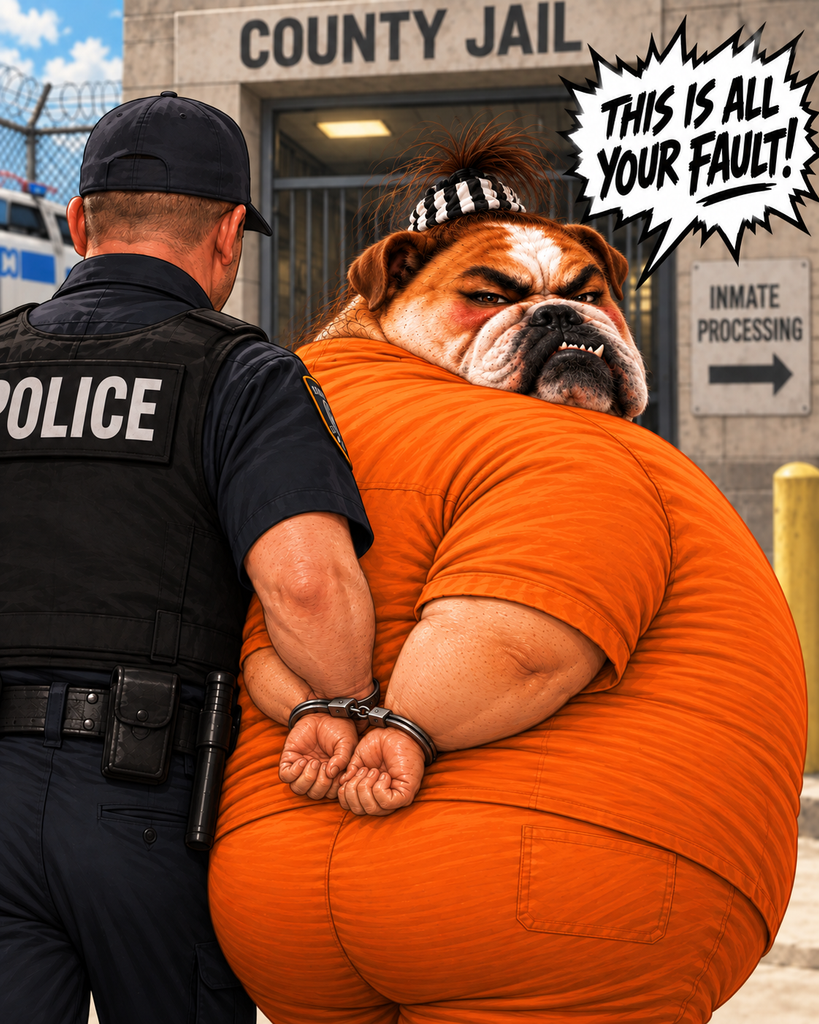
The Bloated Bully version:
One of the strangest lessons I’ve learned is how quickly the conversation can shift away from the original behavior.
Instead of:
Did this happen?
the discussion becomes:
Why were you documenting it?
Instead of:
Was this boundary crossed?
it becomes:
Why are you making such a big deal about boundaries?
Instead of discussing the original conduct, suddenly your response to the conduct is on trial.
Instead of:
Was the jury verdict guilty?
it becomes:
This is all your fault — how could you get me into so much trouble?
That’s when I learned another Karen Rule:
Don’t let somebody else’s deflection destroy your documentation.
Write down the original incident.
Keep it factual.
Save the evidence.
Then stop arguing, and let law enforcement and the court system do their jobs (hopefully — but that’s another post for another day).
When the Red Flags Start Adding Up
Again, one disagreement does not make somebody a Bloated Bully.
Neither does an irritated neighbor, a cranky neighbor, a weird neighbor, or the person whose leaf blower makes you briefly consider listing your house on Zillow every Saturday morning.
We’re looking for patterns.
Entitlement.
Assumptions treated as fact.
An inability to accept responsibility.
And when those behaviors begin appearing together — particularly alongside boundary violations, intimidation, property disputes, online harassment, repeated complaints, threatening words or behaviors, or escalating confrontations — I would stop relying entirely on goodwill.
Start protecting yourself.
That doesn’t mean starting a war – though with some people, it will turn into a war no matter what you say or do, or how kind you try to be in your accountability-holding.
Quite the opposite.
It means becoming boringly prepared.
Install appropriate security cameras.
Save messages.
Photograph your property.
Keep original files.
Write down dates and times.
Save report numbers, AND the names of the officers you meet.
Document witnesses.
Keep your communication brief and factual.
And preserve things even when you aren’t certain you’ll ever need them.
Because one of the worst parts about dealing with a truly difficult neighbor is that there are times when you just don’t know which incident matters until after it matters.
Keep the Receipts
If there’s one things the Bloated Bully experience has taught me, it’s this:
Your memory is not a documentation system.
You’ll swear you’ll remember the date.
You won’t.
You’ll think you’ll remember exactly what somebody said.
Six months later, you’ll remember the general idea.
You’ll assume the security-camera clip will still be there. And then you realize Ring only stores it for 60 days unless you explicitly changed the settings for longer.
Then you’ll discover it wasn’t saved.
So if something weird happens once, make a note.
If it happens twice, start paying attention.
And if it starts becoming a pattern?

Keep. The. Receipts.
Because you cannot control whether the person next door behaves reasonably.
You can control how calmly, carefully, and thoroughly you respond.
And sometimes that makes all the difference.
